
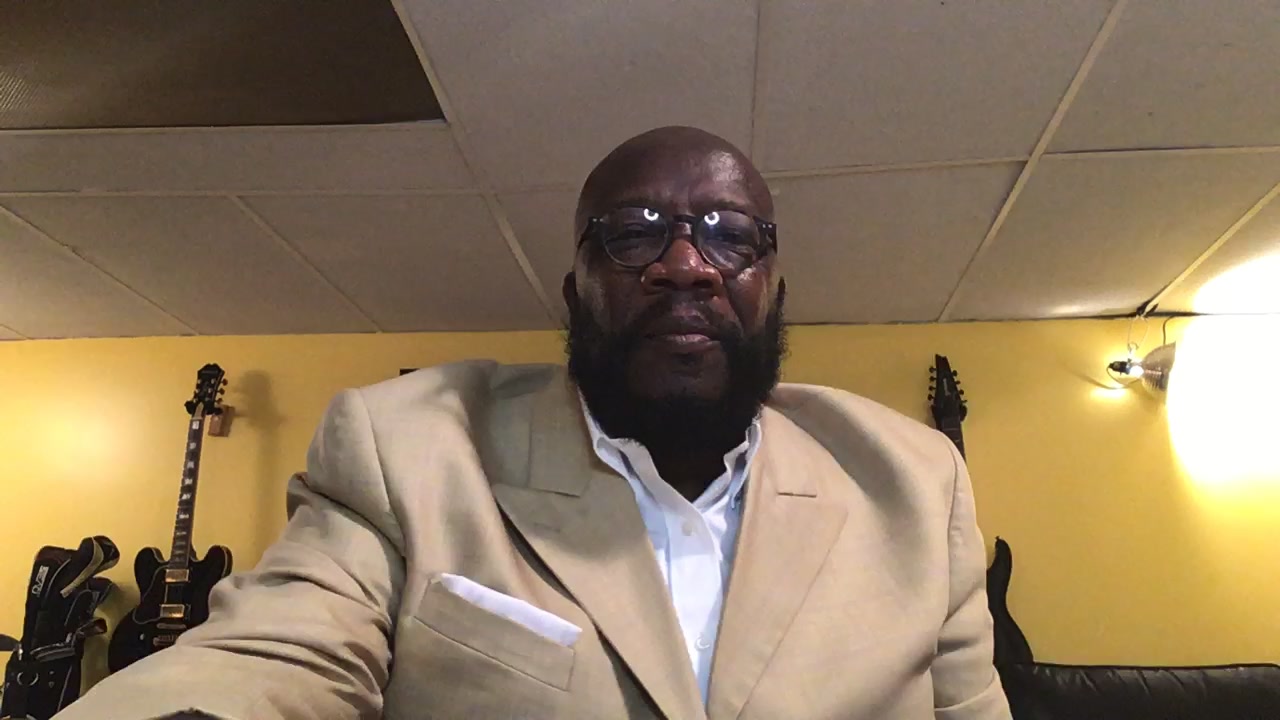

Sermon: “An Unjust Law Is No Law at All”
Romans 7:1 – 6
From the Birmingham jail, where he was imprisoned as a participant in nonviolent demonstrations against segregation, Dr. Martin Luther King, Jr., wrote in longhand the letter. It was his response to a public statement of concern and caution issued by eight white religious leaders of the South. Dr. King, who was born in 1929, did his undergraduate work at Morehouse College; attended the integrated Crozer Theological Seminary in Chester, Pennsylvania, one of six black pupils among a hundred students, and the president of his class; and won a fellowship to Boston University for his Ph.D.
Excerpt from Dr. King’s letter:
“WHILE confined here in the Birmingham city jail, I came across your recent statement calling our present activities “unwise and untimely.” Seldom, if ever, do I pause to answer criticism of my work and ideas. If I sought to answer all of the criticisms that cross my desk, my secretaries would be engaged in little else in the course of the day, and I would have no time for constructive work. But since I feel that you are men of genuine good will and your criticisms are sincerely set forth, I would like to answer your statement in what I hope will be patient and reasonable terms.
I think I should give the reason for my being in Birmingham, since you have been influenced by the argument of “outsiders coming in.” I have the honor of serving as president of the Southern Christian Leadership Conference, an organization operating in every Southern state, with headquarters in Atlanta, Georgia. We have some eighty-five affiliate organizations all across the South, one being the Alabama Christian Movement for Human Rights. Whenever necessary and possible, we share staff, educational and financial resources with our affiliates. Several months ago, our local affiliate here in Birmingham invited us to be on call to engage in a nonviolent direct-action program if such were deemed necessary. We readily consented, and when the hour came, we lived up to our promises. So, I am here, along with several members of my staff, because we were invited here. I am here because I have basic organizational ties here.
Beyond this, I am in Birmingham because injustice is here. Just as the eighth-century prophets left their little villages and carried their “thus saith the Lord” far beyond the boundaries of their hometowns; and just as the Apostle Paul left his little village of Tarsus and carried the gospel of Jesus Christ to practically every hamlet and city of the Greco-Roman world, I too am compelled to carry the gospel of freedom beyond my particular hometown. Like Paul, I must constantly respond to the Macedonian call for aid.
Moreover, I am cognizant of the interrelatedness of all communities and states. I cannot sit idly by in Atlanta and not be concerned about what happens in Birmingham. Injustice anywhere is a threat to justice everywhere. We are caught in an inescapable network of mutuality, tied in a single garment of destiny. Whatever affects one directly affects all indirectly. Never again can we afford to live with the narrow, provincial “outside agitator” idea. Anyone who lives inside the United States can never be considered an outsider.
You deplore the demonstrations that are presently taking place in Birmingham. But I am sorry that your statement did not express a similar concern for the conditions that brought the demonstrations into being. I am sure that each of you would want to go beyond the superficial social analyst who looks merely at effects and does not grapple with underlying causes. I would not hesitate to say that it is unfortunate that so-called demonstrations are taking place in Birmingham at this time, but I would say in more emphatic terms that it is even more unfortunate that the white power structure of this city left the Negro community with no other alternative.”
Our Subject
St. Augustine says, Lex iniusta non est lex (English: An unjust law is no law at all), is a standard legal maxim. Originating with St. Augustine, the motto was used by St. Thomas Aquinas and quoted by Martin Luther King Jr during the Civil Rights Movement to describe racial segregation and discrimination against African Americans.
“One has not only a legal, but a moral responsibility to obey just laws. Conversely, one has a moral responsibility to disobey unjust laws.” – Martin Luther King, Jr.
Matthew 5:17: Jesus and the Law
17 “Do not think that I have come to abolish the Law or the Prophets; I have not come to abolish them but to fulfill them.
I. THE LAW AND THE PROPHETS
a. Law
The Pentateuch was the first 5 books of the Jewish scriptures, which are the first 5 books of our Old Testament. This was also called the Law of Moses.
b. Prophets
The prophets Jesus was referring to was what we would call the Major and Minor Prophets. This, included with the writings of the first 5 books, would comprise the whole of Jewish scripture, or what we call the Old Testament. The scriptures that Jews read today are the same as they were as given by God thousands of years ago.
c. Jesus fulfilled.
Jesus said, “I have not come to abolish them {the Law & Prophets}, but to fulfill them.” Jesus fulfilled the law by meeting its just demands with a perfect life and satisfying its curse by dying on the cross. Jesus fulfilled the Law, being perfect. And Jesus also fulfilled the writings of the Prophets because they prophesied of His coming, His life, and His crucifixion. Jesus is not speaking against the Law, but against the hypocrites, and the Pharisees legalism. Their legalism was not the keeping of all details of the law, but the hallow sham of keeping the laws externally, to gain merit with God, while breaking them inwardly. They followed the letter of the law, while ignoring the spirit.
Verses 1-6 So long as a man continues under the law as a covenant, and seeks justification by his own obedience, he continues the slave of sin in some form. Nothing but the Spirit of life in Christ Jesus, can make any sinner free from the law of sin and death. Believers are delivered from that power of the law, which condemns for the sins committed by them. And they are delivered from that power of the law which stirs up and provokes the sin that dwells in them. Understand this not of the law as a rule, but as a covenant of works. In profession and privilege, we are under a covenant of grace, and not under a covenant of works, under the gospel of Christ, not under the law of Moses. The difference is spoken of under the similitude or figure of being married to a new husband.
The second marriage is to Christ. By death we are freed from obligation to the law as a covenant, as the wife is from her vows to her husband. In our believing powerfully and effectually, we are dead to the law, and have no more to do with it than the dead servant, who is freed from his master, has to do with his master’s yoke. The day of our believing is the day of being united to the Lord Jesus. We enter upon a life of dependence on him, and duty to him. Good works are from union with Christ; as the fruitfulness of the vine is the product of its being united to its roots; there is no fruit to God, till we are united to Christ. The law, and the greatest efforts of one under the law, still in the flesh, under the power of corrupt principles, cannot set the heart right with regard to the love of God, overcome worldly lusts, or give truth and sincerity in the inward parts, or anything that comes by the special sanctifying influences of the Holy Spirit. Nothing more than a formal obedience to the outward letter of any precept, can be performed by us, without the renewing, new-creating grace of the new covenant.
Romans 7:13-17
13 Has then what is good become death to me? Certainly not! But sin, that it might appear sin, was producing death in me through what is good, so that sin through the commandment might become exceedingly sinful. 14 For we know that the law is spiritual, but I am carnal, sold under sin. 15 For what I am doing, I do not understand. For what I will to do, that I do not practice; but what I hate, that I do. 16 If then, I do what I will not to do, I agree with the law that it is good. 17 But now, it is no longer I who do it, but sin that dwells in me.
Paul had just established the fact that the law is holy, just, and good. Now he asks a question that can certainly be on the minds of his readers – and perhaps our minds as well. “Has then what is good become death to me?” In effect he’s asking, “If the law is good, how does it produce death in me?” How does a good thing produce a bad thing? He goes on to answer his question with an emphatic, “Certainly not,” and he follows up his answer with a reason behind it. Once again, he personifies sin, and says that sin, proving itself to be sin, produced death, through what was good – the law, thereby proving that sin is utterly sinful. In other words, when the law came, it exposed how sinful we were, but it also did something more – it created more sinful desires in us by its prohibitions. This now makes sin not just sinful, but utterly sinful.
Paul then begins another train of thought to explain the sinfulness of sin. Let’s remember that he’s still talking about sin, and the law before we came to know Christ. So even though he’s using the present tense, he’s referring to the time before he could be justified by faith and have Christ in his life to help him live a life free of sin.
He says that the law is spiritual but uses himself as an example (referring to all people), to say that we are carnal (with earthly, sinful desires), and that we were sold to sin, meaning, that we had given ourselves over to sinful living. He then explains the human dilemma where there’s a contradiction between the mind and body – the desire and the behavior. He says that it’s difficult to understand that contradiction. He desired to do one thing, but couldn’t do it, he hated doing something, but he did just that. Is that not true of all of us? We didn’t really desire sin, but the problem was, that we didn’t have the ability to do the good we wanted to do, and we didn’t have the ability to say no to the evil we didn’t want to do.
He then explains that if we did what we didn’t want to do, we were agreeing that the law was good, because it was telling us not to do evil – therefore it must be good. He goes on to say that if this was the case, where we were living a life of contradiction – desiring to do good, and not being able to, and hating sin and yet committing sin, then it means that it wasn’t really us sinning, but sin in us, was causing us to sin. It’s because of indwelling sin in our lives that we sinned – if not for that, we would never have sinned.
Romans 7:18-25
18 For I know that in me (that is, in my flesh) nothing good dwells; for to will is present with me, but how to perform what is good I do not find. 19 For the good that I will to do, I do not do; but the evil I will not to do, that I practice. 20 Now if I do what I will not to do, it is no longer I who do it, but sin that dwells in me. 21 I find then a law, that evil is present with me, the one who wills to do good. 22 For I delight in the law of God according to the inward man. 23 But I see another law in my members, warring against the law of my mind, and bringing me into captivity to the law of sin which is in my members. 24 O wretched man that I am! Who will deliver me from this body of death? 25 I thank God—through Jesus Christ our Lord! So then, with the mind I myself serve the law of God, but with the flesh the law of sin.
He proceeds further acknowledging that nothing good dwelt in our flesh (our sinful nature) – only sin. We had the desire to go well, but we lacked the ability to do it. Once again, he says that he didn’t do the good he wanted to but did the evil he didn’t want to. And so, if he did what he didn’t want to, then it wasn’t really him doing it, but indwelling sin (the flesh or the sinful nature) doing it.
He then begins to conclude this reasoning by saying he discovered a law that though we willed (desired) to do good, evil was present with us. He says that deep down, we desired to live by God’s law, but because of the other law in our bodies, we were brought into captivity of the law of sin, which controlled our bodies.
He goes on to call himself a wretched man (referring to all of mankind) who desired to live by the law, but couldn’t live by it, and asks who will deliver him from this “body of death.” What he means to say is that no one could set us free from using our bodies to live sinful lives that lead to death and goes on to say that Jesus was the answer to that problem. That’s why Jesus came into the world – to save us from the bondage to sin. He’s already established the fact that just like Jesus died to sin, and is alive to God, so too, we can now live our lives as dead to (not connected with) sin, and alive to (connected with) God.
He concludes by saying that until we came to know Christ, this struggle existed, but now because we can choose (make up our minds) to live by the law of God, that struggle need not exist any longer. He then adds that if we choose to be led by the sinful nature (the flesh), then we will once again become enslaved to the law of sin. Earlier we had the desire to serve God, but lacked the ability to do so, but now we have both the desire and the ability to serve God in obedience. The choice is left with us. Do we want to follow the flesh, or do we want to follow the Spirit?
Dr. King’s Letter Closing
“I must close now. But before closing I am impelled to mention one other point in your statement that troubled me profoundly. You warmly commended the Birmingham police force for keeping “order” and “preventing violence.” I don’t believe you would have so warmly commended the police force if you had seen its angry violent dogs literally biting six unarmed, nonviolent Negroes. I don’t believe you would so quickly commend the policemen if you would observe their ugly and inhuman treatment of Negroes here in the city jail; if you would watch them push and curse old Negro women and young Negro girls; if you would see them slap and kick old Negro men and young boys, if you would observe them, as they did on two occasions, refusing to give us food because we wanted to sing our grace together. I’m sorry that I can’t join you in your praise for the police department.
It is true that they have been rather disciplined in their public handling of the demonstrators. In this sense they have been publicly “nonviolent.” But for what purpose? To preserve the evil system of segregation. Over the last few years, I have consistently preached that nonviolence demands that the means we use must be as pure as the ends we seek. So, I have tried to make it clear that it is wrong to use immoral means to attain moral ends. But now I must affirm that it is just as wrong, or even more, to use moral means to preserve immoral ends.”